
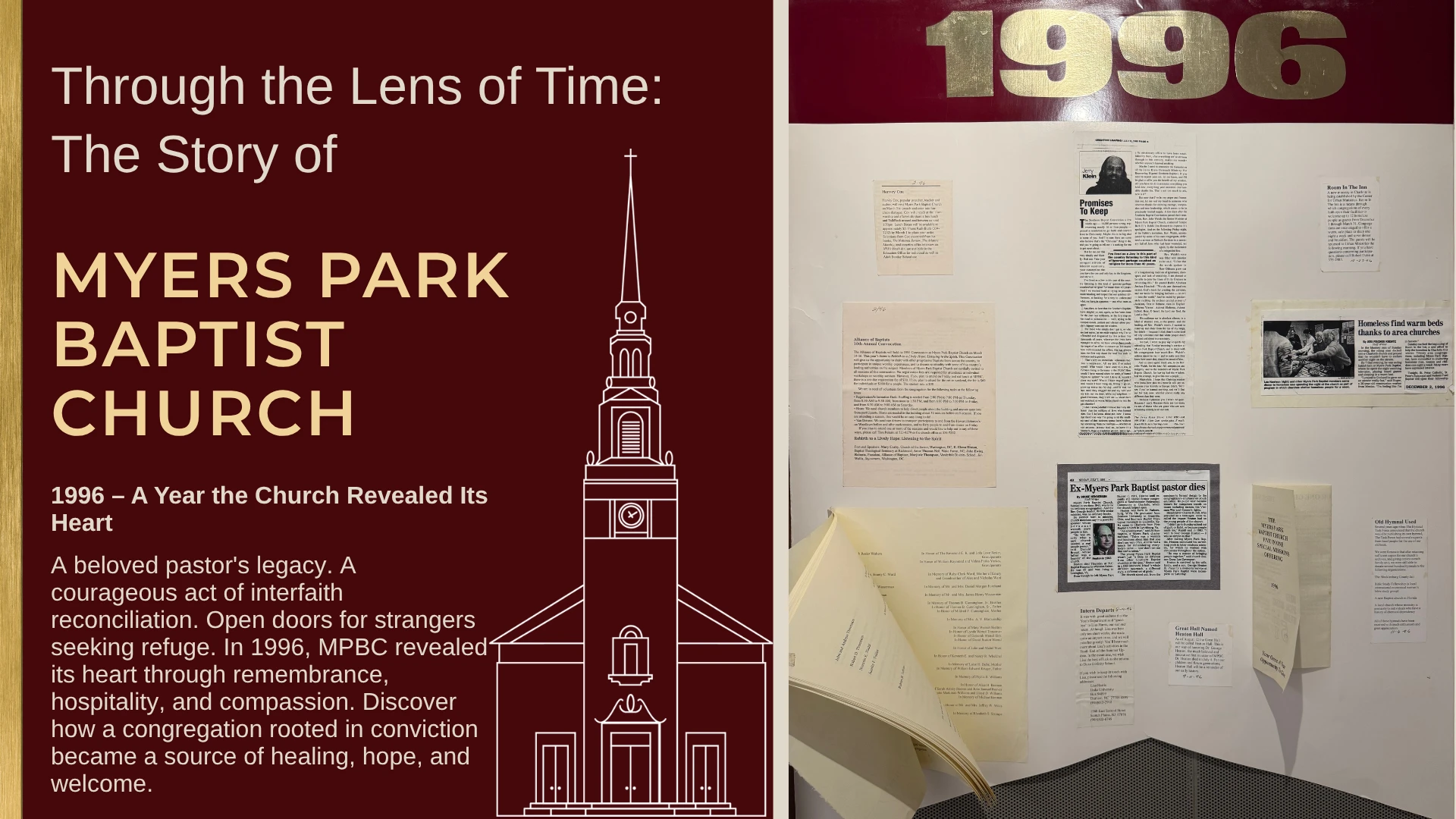
1996 - The Year the Church Revealed Its Heart
Some years are remembered for dramatic change. Others are remembered for the quiet ways a community reveals its heart. For Myers Park Baptist Church, 1996 was such a year. Amid tributes to a beloved founding pastor, conversations with influential religious thinkers, partnerships serving the city's most vulnerable neighbors, and moments of remarkable interfaith reconciliation, the congregation demonstrated what it meant to be a church rooted in conviction and guided by compassion. The story of 1996 is one of a people remembering who they were while faithfully becoming who they were called to be.
Remembering Rev. George Heaton
Myers Park Baptist Church mourned the death of Rev. George Heaton, its first senior minister. Heaton, who led the congregation in its formative years after its founding in 1943, was remembered as a gifted preacher and deeply relational pastor. Donald Bryant recalled him as “a real people person,” while Jo Huntington described his unusual warmth, kindness, and ability to remember everyone’s name. Although Heaton left Myers Park Baptist in 1957, he continued visiting former congregants at Southminster Retirement Community. His ministry extended beyond the pulpit into a career of labor-relations ministry, where Dona Lee Davenport remembered him as “a master of bringing people together.”
Heaton’s influence also helped establish a distinctive identity for Myers Park Baptist. In a 1983 interview, he described the church as having “a whole different approach, a different style, a different set of goals.” The congregation became known for its emphasis on youth education and, over time, for outspoken positions on racism, the Vietnam War, and women’s rights. Charles Kuralt, who attended the church as a teenager, remembered being drawn to worship because he wanted to hear George Heaton preach. Heaton was survived by his wife, Emily, and son, George Heaton III.
Great Hall Named Heaton Hall
In a tribute to the church’s early history, Myers Park Baptist renamed its Great Hall Heaton Hall. The decision honored Dr. George Heaton as the church’s beloved and innovative first minister. The renamed space was intended to keep his story alive for children and future generations.
Harvey Cox Visits Myers Park Baptist Church
In March 1996, Myers Park Baptist Church welcomed Harvey Cox, popular preacher, teacher, and author, for worship and conversation. Cox preached during the 11 a.m. worship service and then joined the congregation for a luncheon dialogue and TalkBack. Selections from his books, as well as interviews and articles featuring his work, were also made available for congregational study. The visit reflected the church’s commitment to thoughtful theological conversation and to learning from voices that challenged and expanded the church’s understanding of faith in the world.
Alliance of Baptists 10th Annual Convocation: “Rebirth to a Lively Hope”
From March 14–16, 1996, Myers Park Baptist hosted the Alliance of Baptists’ 10th Annual Convocation. The theme, “Rebirth to a Lively Hope: Listening to the Spirit,” captured the spirit of progressive Baptist life: gathering across the country for worship, fellowship, spiritual reflection, and meaningful conversation. Featured speakers included Mary Cosby of Church of the Savior in Washington, D.C.; E. Glenn Hinson of Baptist Theological Seminary at Richmond; Anne Thomas Neil of Wake Forest, N.C.; John Ewing Roberts, President of the Alliance of Baptists; Marjorie Thompson of Vanderbilt Divinity School; and Jim Wallis of Sojourners in Washington, D.C. The congregation was invited not only to attend but also to serve as hosts, registration volunteers, and van drivers. In this way, hospitality itself became part of the ministry.
A Response to the “Resolution on Jewish Evangelism”
In June 1996, Myers Park Baptist offered a striking example of interfaith courage and humility following the Southern Baptist Convention’s passage of a resolution directing resources toward converting Jewish people to Christianity. Rev. John Walsh, senior minister of Myers Park Baptist, contacted Rabbi Jim Bennett of Temple Beth El to express his apologies. At Rabbi Bennett’s invitation, Walsh then joined members of his congregation at Sabbath services, where he spoke to a Jewish community wounded by the denomination’s action. Walsh spoke openly about the history of ignorance, disrespect, and insensitivity behind the resolution and joined Billy Graham in criticizing it. He quoted Rabbi Abraham Joshua Heschel on the sacred power of words and concluded by reciting the central Jewish prayer, the Shema, first in Hebrew and then in English.
Jerry Klein described the response to Walsh’s words as one of silence, awe, and healing. Klein expressed gratitude to Rev. John Walsh for his compassion and integrity and to the members of Myers Park Baptist for having the wisdom and courage to give him a pulpit.
Ministry Beyond the Church Walls
The church’s progressive Baptist witness was also expressed through partnerships with organizations serving people facing poverty, homelessness, illness, and difficult circumstances.
The Baptist Children’s Homes of North Carolina provided refuge and care for children through residential programs, foster homes, preschool care, technical training, continuing education, and social services.
The Charlotte Center for Urban Ministry brought together congregations in ministries of compassion and efforts to understand and address the causes of urban poverty.
The Lakewood Community Development Corporation represented a partnership among Myers Park Baptist Church, Faith Memorial Baptist Church, and the Lakewood Community. Together, they helped build Habitat for Humanity’s 200th house in Charlotte while continuing to respond to significant needs in the community.
Crisis Assistance Ministry provided emergency financial assistance, clothing and furniture assistance, and its Partners in Hope program to low-income families in Mecklenburg County.
The Regional AIDS Interfaith Network, or R.A.I.N., worked to nurture an informed and compassionate response to people living with AIDS through education, Care Teams, and partnerships with AIDS service organizations. Myers Park Baptist members served on one of the Care Teams, and Rev. Deborah Warren, R.A.I.N.’s executive director, was a member of the church.
These ministries demonstrate a faith expressed not simply through words but through tangible care, partnership, and a commitment to the dignity of every person.
Room in the Inn: Making Room for Our Neighbors
A new Charlotte ministry, Room in the Inn, invited congregations of different faiths to open their buildings to people experiencing homelessness. Participating churches provided a warm and safe place to sleep, along with dinner and breakfast, before guests returned to Urban Ministries the following morning.
Lea Harrison and other Myers Park Baptist members participated by serving dinner to people staying at the church. One guest, Roger, a 26-year-old construction worker from Mexico, arrived after praying that he would not have to spend another night on the streets. At Myers Park Baptist, he found a warm meal, a safe place to sleep, and a community of welcome. “I prayed to God and he gave me an answer really fast,” Roger said. The inaugural effort brought together twenty congregations, including Myers Park Baptist, with St. Peter Catholic, St. Peter’s Episcopal, and Nations Ford Baptist among those participating. Robert Dulin was the contact person for organizing this effort.
Farewell to Lisa Harris
The Youth Department also said farewell to Lisa Harris, the church’s summer intern. Though she spent only ten weeks with the congregation, she made a significant impact and was remembered with affection as she returned to Duke Divinity School.
Looking back, 1996 stands as a testament to the character Myers Park Baptist had been cultivating since its earliest days. The congregation remembered those who laid its foundations, welcomed opportunities to learn and grow, and responded to the challenges of its time with both compassion and conviction. Whether honoring the legacy of George Heaton, opening its doors to fellow Baptists from across the country, serving neighbors experiencing homelessness, caring for those affected by AIDS, or extending respect and friendship across faith traditions, the church revealed its heart through action. In a year marked not by dramatic change but by faithful witness, Myers Park Baptist demonstrated that its greatest strength lay in living the values it professed. The story of 1996 is ultimately the story of a congregation remembering who it was and, in doing so, showing the community around it who it aspired to be.