
1975 - A Year of Learning and Justice in Community
Listening, Learning, and Living Faith Together
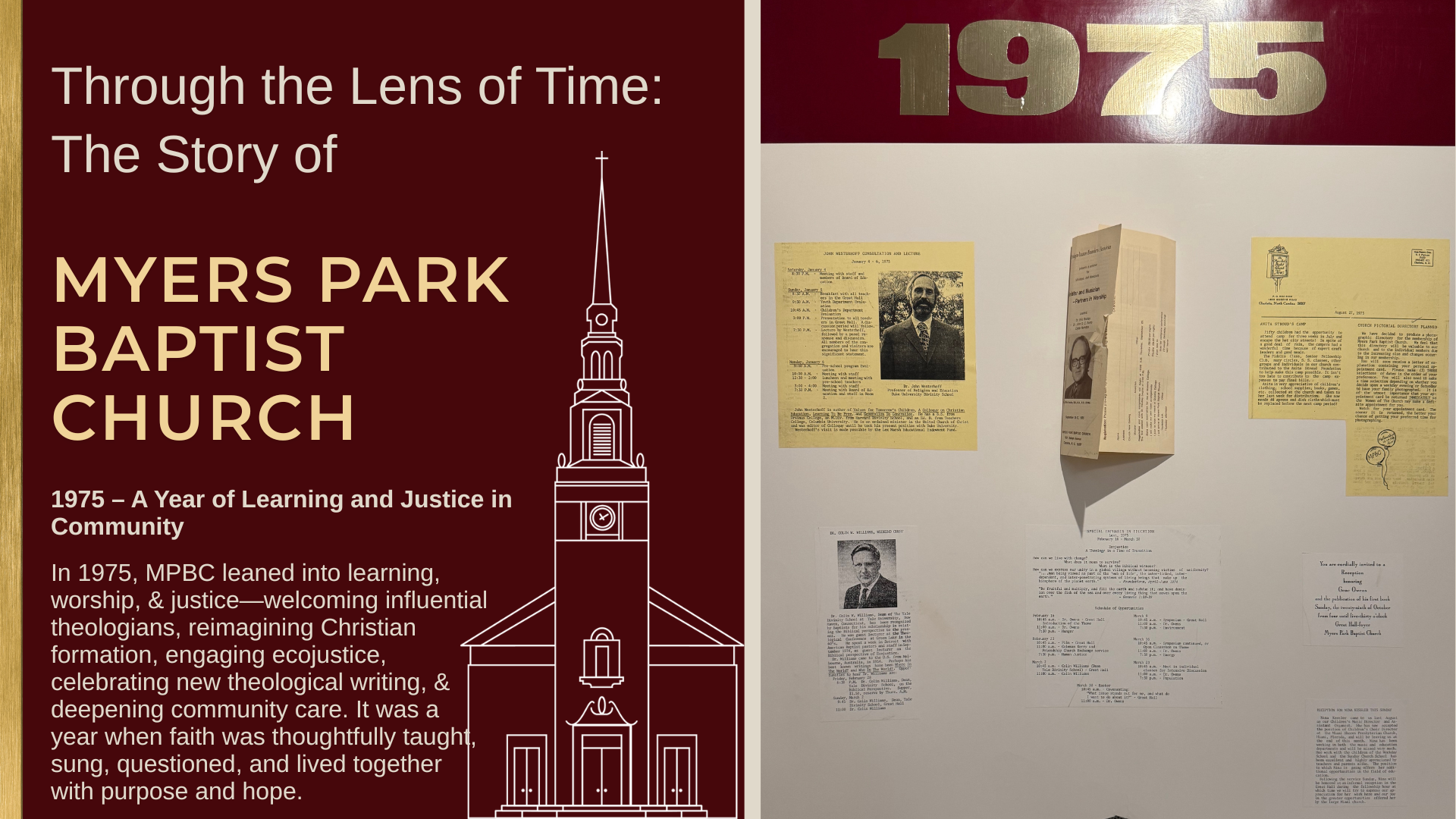
In 1975, Myers Park Baptist Church leaned decisively into the work of thoughtful formation—asking not only what the church believed, but how faith was lived, taught, and shared. Through visiting scholars, creative worship conversations, public commitments to justice and care, and new ways of strengthening community connections, the congregation revealed a deep desire to nurture a faith that was intellectually curious, spiritually grounded, and visibly engaged with the wider world.
Christian Formation as a Way of Life: John H. Westerhoff III
Kicking off the year, Christian educator Dr. John H. Westerhoff III, Professor of Religion and Education at Duke University Divinity School, visited the congregation for a consultation and lecture on Christian formation. Renowned for his emphasis on faith shaped within community and across generations, Westerhoff challenged the church to see education as more than classroom instruction. Instead, he invited members to understand Christian formation as a shared life of faith—lived out in families, congregational practices, and daily relationships. Supported by the Lex Marsh Educational Endowment Fund, his visit reflected the church’s continued investment in forward‑thinking ministry and lifelong spiritual growth.
Minister and Musician: Partners in Worship
The church also hosted a regional seminar titled “Minister and Musician: Partners in Worship,” led by distinguished hymn scholar and theologian Dr. Erik Routley. Alongside church music leader John S. C. Kemp and musician Clyde Herndon, Routley convened ministers and musicians from across the Carolinas to explore the theological depth of congregational song and the collaborative relationship between preaching and music. Funded through the Bridges‑Heaton Founders Activities Series, the seminar underscored the church’s conviction that worship—thoughtfully planned and creatively expressed—shapes the faith and identity of the community.
Lent and the Call to Ecojustice
During the Lenten season, the congregation engaged an ambitious educational series titled Ecojustice: A Theology in a Time of Transition. At its outset, Dr. Gene Owens posed searching questions: How can we live with change? What does it mean to survive? What is the biblical witness? How can we express unity in a global village without becoming victims of uniformity? Each Sunday invited exploration of a different theme—hunger, human justice, environmental stewardship, energy, population, and biblical perspectives on ecojustice—culminating in a lecture by Dr. Colin W. Williams, Dean of Yale Divinity School. The series reflected the church’s growing commitment to wrestle faithfully with the urgent social and environmental challenges of the time.
A Pastor’s Questions in Print: Dr. Gene Owens’ First Book
In January, the congregation celebrated another milestone: the publication of Rev. Dr. Gene Owens’ first book, Confessions of a Religionless Christian, released by Abingdon Press. In this 112‑page personal reflection, Owens explored faith, doubt, and the search for authentic Christianity beyond institutional forms. The book marked an important moment in his ongoing theological work and offered readers a candid invitation into the questions shaping both his ministry and the congregation’s life. Used and signed copies remain available today through booksellers such as AbeBooks and Alibris.
Extending Care Beyond the Church Walls
The church’s commitment to community care found practical expression in its continued support of Anita Stroud’s summer camp. For three weeks, the program provided children from the city with recreation, meals, and creative activities. Congregational contributions of funds, supplies, books, games, and clothing made the camp possible, extending the church’s ministry well beyond Sunday worship and reinforcing its identity as a caring presence in the wider community.
Strengthening Connections: A Pictorial Directory
Recognizing the need for connection in a growing and changing congregation, church leaders also approved the creation of a pictorial directory. Appointment cards were mailed to members, offering multiple dates and times for family photographs and encouraging prompt participation. The effort reflected a desire to help members put names to faces and to strengthen relationships throughout the church family.
A Year of Intentional Faith
Taken together, these moments paint a vivid picture of Myers Park Baptist Church in 1975: a congregation deeply invested in education, creative worship, justice‑centered theology, and compassionate outreach. It was a year marked by listening and learning—by a determination to form a faith that was both intellectually alive and practically engaged, responsive to the questions of its time while rooted in a shared life of community and hope.